The German apartment viewing: what actually happens
You get 20 minutes. The landlord is watching you the whole time. There are unwritten rules nobody mentions. Here's what to expect and how not to blow it.
Haus Together
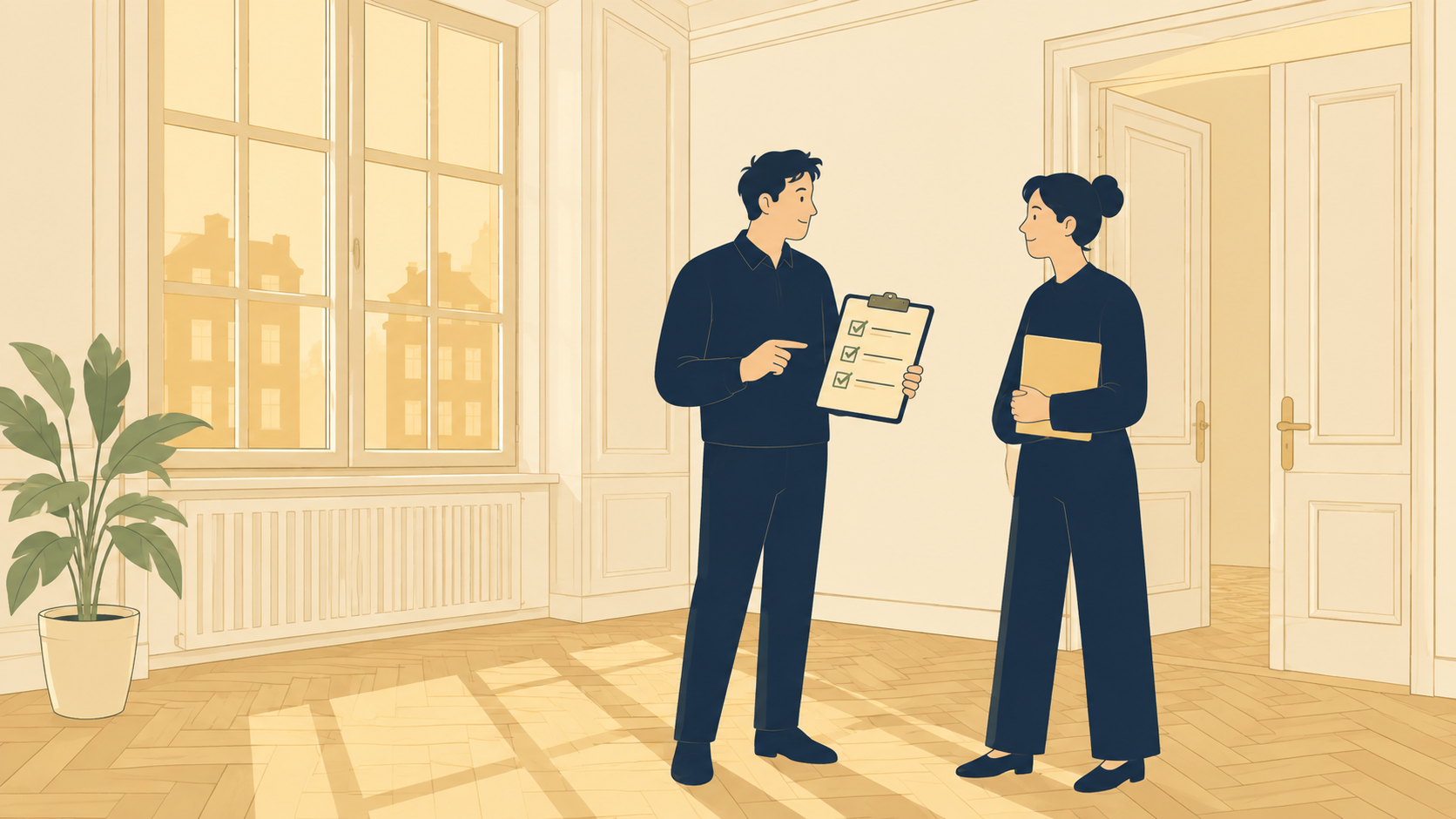
A German apartment viewing is not an open house. There’s no background music, no bowl of fruit on the kitchen counter, no agent handing you a glossy brochure. It is closer to a job interview where the job is being allowed to live somewhere.
You get a specific time slot — usually 20 to 30 minutes. The landlord or property manager shows you around. Other applicants may be scheduled before and after you. Everyone knows this. The atmosphere is polite but efficient.
Before you arrive
Bring your documents. Not all of them — a full dossier at the viewing looks presumptuous and slightly desperate. But bring the key things: a copy of your SCHUFA report and a payslip or proof of income. If the landlord likes you, they may ask for the full dossier on the spot. Being able to hand it over immediately puts you ahead of people who say they’ll email it later.
Arrive on time. Not five minutes early, not two minutes late. Germans take punctuality seriously and this is your first impression.
What they’re actually looking at
The landlord is not just showing you the apartment. They’re watching how you move through it.
Do you open every cabinet and stick your head in every corner, or do you move through calmly? Are you respectful of the space? Do you ask reasonable questions or do you lead with complaints about things you’d want changed?
They’re also listening to how you talk. Do you mention you work night shifts and keep unusual hours? Do you casually mention your last landlord was difficult? These things register.
Shoes
Take them off at the door unless you’re clearly told otherwise. This is standard in German homes. If you’re unsure, watch what the landlord does or ask. Getting this wrong isn’t disqualifying but getting it right signals that you understand how things work here.
What to ask
Ask things that show you’re serious and planning to stay:
How old is the heating system? When was the building last renovated? What are the neighbours like — are there families, mostly long-term tenants? Is there a Hausordnung (house rules document) you should know about?
These questions tell the landlord you’re thinking long-term and care about the building, not just the apartment.
Don’t spend the viewing negotiating rent. It’s too early and it reads badly. If the rent is a problem for you, this might not be the right apartment.
What not to ask
Don’t ask if you can knock down a wall or repaint everything immediately. Even if you’re genuinely planning to negotiate renovation work, the viewing is not the moment.
Don’t ask about subletting unless you have a real reason. It makes you sound like you’re already planning to leave.
Don’t ask about the neighbours in a way that implies you’re hoping not to interact with them. “Are the neighbours quiet?” is fine. Anything that sounds like you want them to stay invisible is a red flag for a landlord who values community in the building.
After the viewing
Send a short email the same day. Two or three sentences: you saw the apartment, you’re very interested, you’re happy to send your full dossier. Do not write a long email. Do not follow up three times in the next 48 hours.
If you haven’t heard back in a week, one follow-up is fine.
If you don’t get it, you won’t always be told why. That’s normal. The landlord found someone they liked better, or someone with a longer work contract, or someone whose income was higher relative to the rent. None of this is personal, even when it feels like it.
Go to the next viewing.
Keeping track of which apartments you’ve viewed and where you stand with each one? Haus Together gives you one place for all of it.
About
Haus Together helps expats and relocation agencies collaborate on apartment searches in Germany.
Learn more →